Carolyn Caldicott's Rosehips on a Kitchen Table combines old-fashioned recipes and tips for cooking seasonal ingredients sourced from the hedgerows, as well as local suppliers and farmers' markets. The recipes combine unusual yet traditional ingredients such as nettles, rosehips and elderberries, as well as plenty of ideas for dealing with seasonal gluts and finding and cooking easily foraged food. There are chapters on Gleaning, Gluts, Growing your Own and Gathering (from shops or hedgerow) plus a section on how to make something out of the most unusual ingredients. Caroline's tried and trusted recipes include delights such as Cob Nut and Rocket Pesto with Maris Piper and Parsnip Gnocchi, Sloe and Elderberry Cider, Wild Garlic and Heritage Potato Dauphinoise and Quince Poached in Vanilla and Cinnamon Syrup. Rosehips on a Kitchen Table is illustrated with Chris Caldicott's evocative photographs of people, places and produce, conjuring up a nostalgic picture of the land, the changing seasons and times past.

Thumb

0 repins 0 comments

Creating special events may look easy to those who attend, but to do it well requires a great deal of knowledge, creativity and organizational skill. Event Management Simplified contains a wealth of information and how-to knowledge that can be used by both seasoned event planners and those just learning the ropes. Contained within these pages is information about:- Skills needed to be an event professional and where to find jobs- Insider tips and strategies for "thinking outside of the box"- Identifying event demographics and laying a strong foundation- Examples, systems, timelines and worksheets for all event elements- Determining if committees are needed and how to keep them on track- Ideas for recruiting sponsors, donors, exhibitors and attendees- Risk management, obtaining permits, and working with jurisdictions- Elements of negotiating contracts with venues, vendors and others- Food and beverage tactics for menu planning, service and contracting- Ways to market and promote your event- Creating site plans and logistics schedules- Contracting for stage, sound, lighting, electronic media, entertainment- Using volunteers for maximum effect- Pre- and post-event activities The easy-to-read format and systems in Event Management Simplified have been successfully used by event planners of all skill levels and by academic institutions as a teaching tool. We guarantee this book will pay for itself many times over in time and financial gain.

Thumb

0 repins 0 comments

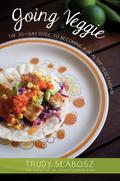
DISCOVER THE EASY AND SATISFYING WAY TO ACHIEVE A HEALTHFUL, MEAT-FREE, CRUELTY-FREE LIFE IN JUST 30 DAYS! Becoming a vegetarian is not about giving up meat, it's about adopting a healthy, cruelty-free lifestyle that will inspire and satisfy you. With Going Veggie, your transition is guaranteed to be easy and painless thanks to the book's step-by-step plan, including: 30-day program to wean you off a meat diet Recipes for delicious, nutrient-packed meals Tricks for acquiring essential proteins using plant-based options Advice on navigating tough spots, cravings and backsliding Tips on how to deal with group dinners and ordering at restaurants Going Veggie puts the fun, adventure and motivation into your path to vegetarianism.

Thumb

0 repins 0 comments

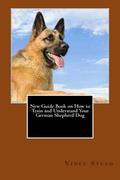
Learn how to take really good care of your German Shepherd with these training and behavior techniques and tips: 1. The Characteristics of a German Shepherd Puppy or Dog 2. What You Should Know About Puppy Teeth 3. Some Helpful Tips for Raising Your German Shepherd Puppy 4. Are Rawhide Treats Good for Your German Shepherd? 5. How to Crate Train Your German Shepherd 6. When Your German Shepherd Makes Potty Mistakes 7. How to Teach your German Shepherd to Fetch 8. Make it Easier and Healthier for Feeding Your German Shepherd 9. When Your German Shepherd Has Separation Anxiety, and How to Deal With It 10. When Your German Shepherd Is Afraid of Loud Noises 11. How to Stop Your German Shepherd From Jumping Up On People 12. How to Build A Whelping Box for a German Shepherd or Any Other Breed of Dog 13. How to Teach Your German Shepherd to Sit 14. Why Your German Shepherd Needs a Good Soft Bed to Sleep In 15. How to Stop Your German Shepherd From Running Away or Bolting Out the Door 16. Some Helpful Tips for Raising Your German Shepherd Puppy 17. How to Socialize Your German Shepherd Puppy 18. How to Stop Your German Shepherd Dog From Excessive Barking 19. When Your German Shepherd Has Dog Food or Toy Aggression Tendencies 20. What you Should Know about Fleas and Ticks 21. How to Stop Your German Shepherd Puppy or Dog From Biting 22. What to Expect Before and During your Dog Having Puppies 23. What the Benefits of Micro chipping Your Dog Are to You 24. How to Get Something Out of a Puppy or Dog's Belly Without Surgery 25. How to Clean Your German Shepherds Ears Correctly 26. How to Stop Your German Shepherd From Eating Their Own Stools 27. How Invisible Fencing Typically Works to Train and Protect Your Dog 28. Some Items You Should Never Let Your Puppy or Dog Eat 29. How to Make Sure Your Dog is Eating A Healthy Amount of Food And more.

Thumb

0 repins 0 comments

Primates in Nutritional Research is a result of a workshop on primate nutrition, held in October 1978. This book presents the topics in the workshop, which are the nutrient requirements and various techniques of feeding monkeys and the in-depth reviews of investigated aspects of nutritional research, where nonhuman primates are the models for human disease. This volume has 16 chapters and is basically divided according to two main themes. The first part (Chapters 1-7) deals with the practical matters of nutritional husbandry. Topics in this section include dietary allowances for nutrients; liquid formulas and protein requirements; caloric intake and weight changes; folic acid needs; and semipurified diets. The second part (Chapters 8-16) describes different models under investigation at the time of publishing. Included in this section are discussions on diet and atherosclerosis; selected aspects of metabolic behavior of the squirrel monkey; effects of dietary fat on plasma lipids; acute and chronic effects of ethanol; and the induction of obesity. Students, teachers, scientists, and researchers interested in nonhuman primate research will find this book very helpful. Professionals in other areas of study, such as nutrition and food science, medicine, metabolic diseases, and animal research, will also benefit from this book.

Thumb

0 repins 0 comments

Shattered Dreams at Kilimanjaro covers the period from the establishment of the former colony of German East Africa in the late 19th century until the formation of the independent State of Tanganyika in 1961. The book focuses on a small group of German settlers who ventured into a new world - German East Africa - to establish farms and businesses in the Mt Kilimanjaro region. This venture was ultimately not successful due, in part, to the tropical diseases contracted by some of the settlers, whilst others were disillusioned with the poor economic returns. The main reason for its failure, however, was the outbreak of World War I and the devastating effects this had on the settlers, culminating in dispossession and deportation. Before the war the settlers had achieved a great deal by clearing virgin land and cultivating it with coffee and an array of vegetables and fruits. Others had started businesses such as building and flour milling. After World War I the former German colony became the British Mandate Territory of Tanganyika. Some former settlers returned only to lose everything again when World War II broke out and all Germans were interned and their properties confiscated. Many of the settlers were deported to Germany in 1940; others were interned in Africa for the duration of the war before being repatriated to Germany. It is fitting to record the history of these adventurous and hard working people. They overcame severe personal hardships and disappointments and, in the end, earned little reward for their toils. Nevertheless, they left a lasting legacy because agriculture was brought to a region in tropical East Africa from which crops are still grown and food produced. Similarly, their businesses gave rise to ongoing enterprises in that region. The book is illustrated with many historical photographs.

Thumb

0 repins 0 comments

Writing for domestic servants in a conversational, accessible way, eighteenth-century housewife Hannah Glasse disapproved of French terminology and fussiness, instead favouring simple dishes that are still cooked today - a preference that has earned her the reputation of 'the first Domestic Goddess'. With recipes for rice pudding, beef rump, barbecued pork, trifle and even the first recipe in Britain for 'Curry the Indian way', as well as tips for choosing your ingredients and cures for the bite of a mad dog, this is an elegant and economical collection of recipes and housekeeping tips to save any homemaker 'a great deal of trouble'.

Thumb

0 repins 0 comments

The support you need to manage your little one's diabetes. With your child's diagnosis of diabetes, you may be feeling grief, sadness, or fear. Everything you need to learn to take care of your child's diabetes, in addition to normal parenting issues, can seem overwhelming. You might even worry that you may do something wrong and harm your child. This reassuring guide will help you find a balance between good diabetes management and normal life. It explains how diabetes impacts your child's growth and development, and gives you plenty of ideas for dealing with routine diabetes care. The first book of its kind, Diabetes Care for Babies, Toddlers, and Preschoolers provides tips on:* Fitting diabetes demands into real-life schedules* Making injections easier* Preventing, detecting, and treating hypoglycemia* Dealing with food issues* Monitoring blood glucose* Working with your child's day care or preschool* Meeting the physical, mental, and emotional needs of your child* Explaining diabetes to brothers and sisters This unique guide also includes experiences and advice from other parents of children with diabetes and amusing Family Circus cartoons.

Thumb

0 repins 0 comments

From the beginning, my mother, Peregrine fed my imagination and senses in every possible way with fairy tales, art, beautiful food, music, opera, poetry and trips into nature, the seaside and the mountains. We lived a nomadic life moving from apartments in New York City to shared houses on Fire Island. By the time I could walk I had the incredible freedom to explore up and down the beach on my own. My mother's artwork was a steady constant and for her it was second only to my wellbeing. Like most young children, I drew and painted freely. Around age eleven, I began to compare my artistic results to my mother's masterful art. After years of practice, her drawing and sureness of line was perfection. Drawing realistically is often a 'deal breaker' for many beginning aritsts. At the time I could not find my way around it. Even though I was encouraged and praised for my efforts, I escaped into music for six years until I went to college 2,000 miles away in Boulder Colorado. The second term there, I began to study art. I found the perfect balance away from home to explore and experiment with art on my own. On visits home I received unconditional support from my mother and stepfather, also an artist. I often wondered if I would have found my way to the easel had I been born into the more conventional family I longed for in middle childhood. Years later, after a hiatus from making art following the birth of my son, Peregrine enticed me back by inviting me to the many open life drawing sessions in the area that she attended. By then my mother was teaching part-time and continued to offer guidance when I needed it. Years of collaboration in our art followed with positive mutual support and critique. We worked together at two endeavors, Fantasy Quilts and Portfolio Rubber Stamps. An easy rhythm developed where we would work out ideas and images separately, come together for brainstorming and then return to our studios to complete final designs. We knew each other well, our str

Thumb

0 repins 0 comments

Is your spiritual life more like a fast-food run than an intimate dinner for two? Whether it's the busy mother's wish to be Wonder Woman-minus the metal bra-or battles with an exploding hot water heater, or fighting the "Resolutionary War" of New Year's Day, Mary Pierce understands the dilemmas of being a woman in today's 24/7 world. From disorganized misery to extreme organizational mania (she used to refer to her children by their household chores: Cat Box Boy, Dishwasher Girl, and Garbage Can Baby), Pierce deals with our fumbling attempts to grow closer to God, encouraging us as she invites us to laugh, cry, love, embrace life, and pray! In her humorous, conversational style, Pierce laughs at her mistakes and her prayers that seem more like advertising jingles (Lord, I need a break today, and Can you hear me now, Lord?). In Confessions of a Prayer Wimp, you'll come to understand that faith is less about what you are or do or say, and more about who God is-someone who loves you no matter what you do.

Thumb

0 repins 0 comments

Rice yields need to increase in order to keep pace with the growing population of Asia and to alleviate hunger and poverty. There appears, however, to be a biophysical limit associated with conventional photosynthetic pathways. The research presented in this book aims at understanding how the rice plant's photosynthetic pathway could be redesigned to overcome current yield limits. The factors controlling yield are discussed from the agronomic to the molecular level. Prospects for improving rice photosynthesis include using genetic engineering to convert rice into a C4 plant. The various chapters in this book deal with photosynthesis; a comparison of C3 and C4 pathways; genes physiology and function, and also discuss this in the broader context of economic consequences of yield improvements for poverty, the molecular genetics of photosynthesis, and ecophysiological and evolutionary perspectives of photosynthesis in wetlands. Researchers on rice, photosynthesis, agronomy, genetic engineering, and food policy will find much of interest in this book.

Thumb

0 repins 0 comments

'Gill and I had dreamt of living in Italy for as long as we'd been together.'This is the story of an Aussie couple who sought a Mediterranean sea change only to find themselves in the sprawling Sicilian city of Catania - the 'anti-Tuscany' of Italy. There, any romantic visions they'd had of restoring a villa or stamping their entwined feet in vats of Chianti grapes disappeared faster than the chief witness in a Cosa Nostra trial. Shamus and Gill's tiny apartment in Catania was located in a grim neighbourhood opposite a triple-X cinema and a shop selling coffins, nearby Mount Etna erupted soon after their arrival, a mystery ailment left Shamus in a neck brace, they crashed a Vespa and had regular dealings with at least one Mafioso. This, then, is an Italian sea change with grit. But it's also a story of optimism, endurance and acceptance, an exploration of the minutiae of Sicilian culture, history, food and religion, and an example of how to find beauty - and humour - in the most unexpected of places.

Thumb

0 repins 0 comments

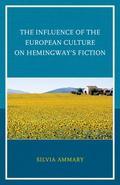
The Influence of the European Culture on Hemingway's Fiction is an essential companion to all those who study Hemingway. The study deals with how Hemingway depicts Europe in his fiction, not necessarily from a biographical point of view, as most critical books have dealt with, but how he assimilates to the culture of Europe, how he portrays the different aspects of that culture in food, music, customs, architecture, and literature. This study views Hemingway's stories and novels through a new lens by applying new critical developments, emergent approaches, and transnational studies to aid in a fuller understanding of Hemingway. Europe for Hemingway was a land of discovery, and one cannot study his major novels without analyzing this passion for these lands. The Europe that Hemingway experienced and recorded in his writing serves as an important element in his fiction, becoming "the other," an alien culture that was sufficiently different from his American roots. Yet this otherness serves first to fulfill his psychological needs to learn and become one of the initiated through suffering-whether it involves himself or the loss of other people around him.

Thumb

0 repins 0 comments

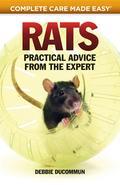
An excellent introduction to the remarkable rat, written by the world-famous Rat Lady, Debbie Ducummum, Rats offers expert advice to all keepers of these popular fancy pets. Held in high regard in Ancient Egypt, major Asian societies, and discriminating homes in America, rats are the most intelligent rodent on the planet and enjoy playing games with their keepers. As with all editions in the Complete Care Made Easy series, Rats offers readers information about selecting the right pets from good sources and acquiring all of the home essentials (for rats: cage, toys, bedding, and furnishings). The book discusses food options and the importance of feeding a rat a healthy, low-cal, low-fat diet based on fruits, veggies, and legumes plus recipes and menu tips. The author also covers the important considerations of rat proofing the home for keepers who opt to give their pets free run of their dwellings. The chapter Beginning Your Friendship" discusses rat socialization, handling, grooming, cleaning, and interactions with children and other pets. The health of a pet rat is covered in the Health Care" chapter that includes choosing a veterinarian, the first vet visit, spaying/neutering, the weekly health exam, plus handling common rat maladies and dealing parasites and emergencies. The real f-u-n begins in chapter seven, Fun Activities," in which the reader can learn how to train his or her rat to walk on a leash, enrich his rat's life with entertaining games, and learn party tricks to impress visitors to the rat's home. True rat lovers will enjoy taking their rats to shows-just like dog shows-to show off their rat's conformation and natural beauty. The chapter Show Time" offers advice on preparing for shows, classes at shows, and competing for ribbons. The final chapter on breeding offers rat enthusiasts advice about reproduction, the birthing process, and handling pups. Glossary, appendices, and index included.

Thumb

0 repins 0 comments

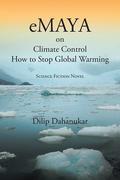
Can we stop Global Warming? Can we do without Nuclear Power? Are we going to face Famine? Are we all doomed? You will find the answers in 'eMaya.' A computer whiz kid created Bitsy, an Artificial Intelligence program to make a report on global warming. She copied her reasoning and comprehension ability to computer Guhu who managed the search engine and to computer Miki who ran the encyclopedia on the internet. These three intelligent byte-brains brought out the myths and the truths of environment change and climate control by interacting amongst them. eMaya was the netname of Bitsy who summarized the discussions and wrote out emails on various aspects of climate control. Though eMaya is science fiction, the facts about the Earth are real and the conclusions are valid. The book explains difficult concepts of environment and climate change in very simple and lucid way. It answers questions about global warming which you are afraid to ask. eMaya is net-active. She scuttles the plan of using a nuclear bomb to create cloud of dust for global cooling by explaining the concept of temperature equilibrium on Earth. She dramatizes an impending famine situation created with the falling stocks of food to project the importance of carbon dioxide in food production. She will enlighten you about the wonderful design of the earth with its carbon cycle, water cycle and thermal balance. You will be wiser to what is essentially needed to deal with problems of power, food, and global warming. Don't you want to know what the World will be like in 2040?

Thumb

0 repins 0 comments

When you're diagnosed with coeliac disease, the questions can seem overwhelming. What can I eat? What can't I eat? Why do I have to avoid gluten? How do I tell people about my condition? What about cooking, shopping and eating out? It's thought that around 1 in 100 people have coeliac disease, although many remain undiagnosed. Thankfully, the treatment for coeliac disease is straightforward: people diagnosed with the condition must avoid gluten in their diet. This essential guide provides clear and comprehensive information about what the disease is and how it will affect your diet and social life. It gives practical advice about prescription foods available and how to deal with children and teenagers with coeliac disease. Chapters also cover pregnancy, holidays and other conditions associated with coeliac disease. Being diagnosed with coeliac disease doesn't have to mean the end to good food: it can be the start of a healthy and enjoyable new way of eating.

Thumb

0 repins 0 comments

Here is Ireland's past distilled - poignant personal narratives and privileged moments, human behaviour recorded in its infinite variety, voices overheard: chamber music. In these pages Elizabethan adventurers, fops, soldiers, widows, landlords, republicans, poets, hedge-school masters and literary lesbians seem to dance through 400 years of Irish history. National events - the siege of Limerick, the battle of the Boyne, Wexford in 1798, the Famine, literary revival, 1916 Rising and Civil War - commingle with details of individual lives - procreation and recreation, courtship, food, clothing, religion, privation, death. Diaries of Ireland is an intimate history of everyday life on this island, a feast for mind and imagination. 'It is altogether an enterprise truly unique; we have not one guinea, we have not a tent; we have not a horse to draw our four pieces of artillery; the General-in-Chief marches on foot, we leave all our baggage behind us; we have nothing but the arms in our hands, the clothes on our backs, and a good courage, but that is sufficient - we are all gay as larks.' - Theobald Wolfe Tone, 24 December 1796 'A Levée at the Castle, attended as usual by pimps, parasites, hangers-on, aidecamps, state officers, expectant clergymen, hungry lawyers, spies, informers, and the various descriptions of characters that constitute the herd of which the motley petty degraded and pretended Court of this poor fallen country is made up. Alas, poor Ireland.' - Sir Vere Hunt, 4 June 1813 'Well, [Patrick] Kavanagh has come and gone: like the monsoon, the mistral, Hurricane Annie: things will never be quite the same again, even if it only meant that somebody told Lady Bellew to shut up, and went on to declare later that he hates Prods.' - Frank McEvoy, 4 March 1958 'This is the stuff of history, direct, real, stimulating and amusing S an excellent anthology.' - Bruce Arnold, Irish Independent 'There is a great deal to interest in this well-produced volume, it whets the ap

Thumb

0 repins 0 comments

In a society with epidemic levels of disease, it is sensible to practice the principles of health, and prevent disease. Otherwise you are left treating the symptoms of disease-again-and again-and again. The body is an interrelated system. Except for life threatening situations, the body should be treated as a whole unit-simply-and with recommendations that balance all body functions. Some excellent health-oriented books deal with individual subjects, like nutrition in one book, elimination in another, exercise in another, and personal development in still another. The Power to Heal: 2nd Edition teaches you the importance of the interrelation between all levels of spiritual, mental, emotional and physical. The Power to Heal gives you step by step instructions that guide you through the wellness process. Wellness does not have to be a difficult subject. Learn how to deal with tension and stress through positive thinking. Eat food that is capable of providing high quality nutrition. Consume chemical and parasite free water. Be conscious of good digestion principles. Help your body eliminate waste products at a speed that allows cells to function at peak performance. Exercise to enjoy life and promote a healthy circulatory and lymphatic system. Simplify the complex subject of supplementation. Protect yourself from electromagnetic polluted frequencies. These subjects, and much more, add up to common sense! DO NOT GET LOST IN ONE SINGLE SUBJECT, AT THE EXCLUSION OF OTHER BALANCING NEEDS. No given day is a test of all your knowledge perfectly implemented. Relax-enjoy your learning experience. Take pride in learning how to take responsibility for your health. Take care of your body-and your body will take care of you. So dear reader, we can reach the end of a pleasant health education journey together. As you close the back cover of The Power to Heal, you will open a door to a higher quality of life. The Power to Heal will always be on your library shelf to refresh y

Thumb

0 repins 0 comments

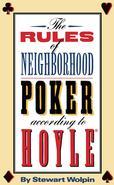
Here's a chance to learn the 200 real rules of poker, including descriptions of the characters, the right food (pizza, cold cuts) and the wrong food to serve; betting strategies that keep the player from losing to much too early; dealing, talking; and the dos and don'ts of a minimal standard of behavior.

Thumb

0 repins 0 comments

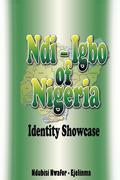
This book comes, first of all, as the answer to the yearning for more written literature on the identity of the Igbo people of the southeast of Nigeria. The early chapters deal with their geographical and historical identity. Then it holds a searchlight on the Igbo worldview: their sociocultural values and traditions, their religious concepts-the nature and character of the supreme being; their family agnates, relationships, and the structure and elements of social control dynamics, which are unknown to the Western world. The showcase also discusses some very powerful elements and traditions that give the Igbo their peculiar identity: the kola nut tradition, Igbo name, and food culture. This book is also a road map of the Igbo experience in the context of Nigerian histopolitical developments from 1914 to 1976: the crises, the pogrom, and the Biafran phenomenon, and the Ikemba Saga. Other hallmarks of this book include the profile of great personages: Igbo greatest heroes past and present, the icons of Igbo identity on both national and international scenes. And finally, it concludes with the roll call: an amazing catalog of more than four thousand Igbo traditional names.

Thumb

0 repins 0 comments

Next Page